
Returned Mobile ACH Payment Meaning: What It Is and What To Do
Learn what a returned mobile ACH payment means, why ACH returns happen, common return codes, and best steps to prevent cash delays.

Understanding mobile ACH payments
If you see a “returned mobile ACH payment” in your records, it means the bank could not complete the payment as sent. The payment is sent back to the originating bank, and then it lands back in your account status as a return. This is the practical answer to “what does returned mobile ACH payment mean” and “what is returned mobile ach payment.”
“Mobile” usually refers to how the customer initiated the transfer. The ACH network still moves the money through banks using ACH rails. The returned item is still an ACH transaction, just one that did not finish cleanly. So the “returned mobile ach payment meaning” is really about an ACH payment that was rejected or later reversed.
From a business view, treat a return like “not paid” until you have confirmed the corrected action. Your invoice is still unpaid, or your customer still owes the amount, depending on your process. This is why financial transaction management should include return handling as a core workflow, not an afterthought.

Why ACH payments get returned
To answer “what does returned ach payment mean,” understand that returns happen when a bank cannot move funds or cannot verify an instruction. The originating bank may reject the item before settlement. The receiving bank may also return it based on account or authorization issues.
Common causes include insufficient funds, a closed or invalid account, and authorization problems. If a customer switched accounts, blocked the transfer, or never gave usable permission, the item can come back. These are also frequent triggers in ACH payment processing because the system relies on account data and customer approval.
Below are typical return triggers you can map to your customer and process controls.
- Insufficient funds: The customer account balance could not cover the debit at the time of processing.
- Closed account: The bank shows the account is closed or not active.
- Account not found: The routing or account details do not match what the bank has on file.
- Unauthorized or wrong permission: The debit lacks valid customer authorization.
- Stop payment or restriction: A customer placed a block that makes the item non-payable.
- Invalid timing or formatting: Missing or malformed payment details can lead to rejection.
Even when you did everything “right,” banks can still return due to late funding, bank-side limits, or customer account changes between sign-up and collection. That is why risk management in payments should assume some return rate and plan for it.

How the ACH return process works
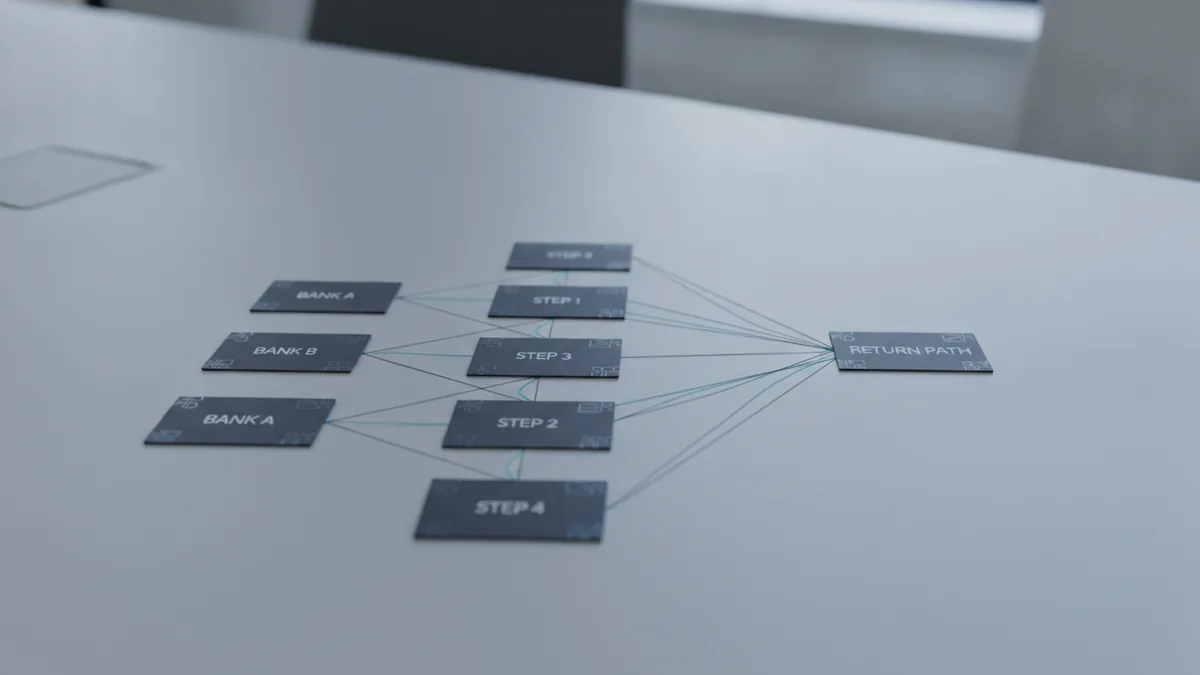
The ACH return process involves multiple parties. First, the originating bank sends the debit item on your behalf. The receiving bank evaluates it against the receiving customer’s account and authorization state. If the item cannot be paid, the receiving bank returns it back through the ACH network.
Timing matters. Some returns arrive quickly, while others show up after additional checks. You may also see “return attempts” or later status updates depending on how your ACH processor surfaces events. For operators, the key is to reconcile your ledgers using the returned notification data you receive.
Here is the typical flow, described in plain terms.
- You submit an ACH debit through your payment flow.
- The originating bank transmits the debit to the ACH network.
- The receiving bank checks the destination account and permission.
- If unpaid, the receiving bank returns the item with a code and reason.
- The originating side posts the return and updates your settlement view.
This is the “multiple parties” reality behind “what is returned mobile ach payment.” It is not just one bank declining. It is an end-to-end evaluation that results in money not being completed.
Typical ACH return codes you will see
ACH return codes provide the specific reason for the return. This is what helps you decide the right fix, not just the fact that money was not collected. If you are asking “returned mobile ach payment cona mean” or “returned mobile ach payment nt cona,” be careful: those phrases look like user search typos. The underlying concept is correct, though. The code is the answer to “why,” and each code maps to a different repair path.
Because codes vary by context, always treat the code shown on your dashboard or return notice as authoritative for the item. Your processor may translate or label them, but the meaning should align with standard ACH reason categories.
| Return code (example) | What it usually means | Most useful fix |
|---|---|---|
| R01 | Insufficient funds | Retry later, or request a different payment method |
| R02 | Account closed | Update customer bank details |
| R03 | No account / unable to locate | Verify routing and account numbers with the customer |
| R04 | Invalid account number | Collect correct account data and re-authorize if needed |
| R05 | Unauthorized debit | Re-check customer authorization and consent records |
| R06 | Account frozen / blocked | Ask customer to resolve with their bank or update details |
| R10 | Customer advises not to pay | Confirm the billing agreement and resend only after resolution |
When you connect ACH return codes with your payment rules, you can reduce future risk. For example, authorization issues often require proof and a new consent flow. Insufficient funds may call for a new collection schedule or balance check.

What returned ACH payments impact
Returned payments rarely stay “small.” They can trigger penalties from your processor or your own payment terms. Many businesses also incur internal handling cost because they must update invoices, customer records, and reconciliation reports.
Cash flow is the first practical impact. Funds can be delayed, and you may still need to cover operating costs without that revenue. This is why returned ACH payments matter in financial transaction management, not just in bookkeeping.
There is also a reputational side. If customers see repeated failed debits, they may lose trust or contact support more often. In some cases, a high return rate can lead to compliance issues. It can also cause suspension of ACH processing privileges, especially when pattern and authorization failures appear.
- Financial penalties: Return fees, exception fees, or higher processing costs.
- Delayed cash flow: Revenue timing shifts by days or weeks.
- Higher support load: More disputes and account update requests.
- Compliance risk: Repeat failures can signal poor controls.
Bottom line: treat returns as a risk management metric. Track returns by customer, payment method, and reason code. Then adjust your collection strategy based on evidence, not guesses.
Best practices to prevent returns
You can reduce returns using a mix of customer checks and operational controls. No single trick eliminates all returns. But you can attack the most common causes: funds, account validity, and authorization.
Start with real-time checks where possible. A real-time balance check is not always available, but you can still reduce “surprise” debits by using timing rules and customer reminders. Also validate account details at onboarding and before collection, especially routing and account number formats.
Then improve customer authorization quality. Clear consent language, correct billing descriptors, and accurate amounts all lower the odds of returns tied to authorization issues. This is part of customer authorization management, and it directly supports payment processing compliance.
- Confirm account data: Collect routing and account numbers carefully and verify formats.
- Use sensible timing: Avoid debit days that often coincide with paycheck timing or known low balances.
- Check for recent updates: If a customer changed bank info, pause and re-confirm authorization.
- Track reason codes: Route each code to a specific fix workflow.
- Communicate early: Send a heads-up before planned debits, especially for recurring collections.
Finally, measure your return rate trends. A rising rate can point to a process change, customer behavior shift, or data quality issue. When you see spikes, stop and diagnose quickly.
Steps to take after a return occurs
When a return hits, do not just mark the invoice “unpaid.” Start by mapping the return to its code and reason. That answer tells you whether to retry, request new details, or fix authorization records. This is also how to handle the question “what is returned mobile ach payment” in the real world: you act on the cause.
Next, update your customer communications. Use a message that is specific but not accusatory. For example, if it is insufficient funds, ask the customer to confirm balance and pick a new payment date. If it is an authorization problem, explain what you need to proceed and how consent will be collected.
Then update your internal records and reconciliation. Make sure your ledger reversals align with the return posting time. If your system supports it, link the original transaction to the return event, so finance can audit cleanly.
- Step 1: Identify the return code from the notice or dashboard.
- Step 2: Apply the code’s fix path (retry, update account, or verify authorization).
- Step 3: Notify the customer and offer clear next actions.
- Step 4: Reconcile and close the accounting loop for the returned item.
- Step 5: Track the outcome to refine your prevention strategy.
If you keep seeing the same customer return repeatedly, treat it as a risk signal. You may need a different payment method or a tighter authorization and validation process. This is the most effective way to avoid repeated cycles and protect your ability to process ACH.
Quick decision guide
If you need a fast “what do I do now” approach, use this decision rule. It keeps teams consistent when returns come in daily.
| What the code points to | Likely next step |
|---|---|
| Insufficient funds | Retry on a later date or switch payment method |
| Closed or invalid account | Collect updated bank info before retrying |
| Unauthorized or not payable | Verify consent and pause collections until fixed |
This helps you answer the underlying “what does returned mobile ach payment meaning” with action. It is not a mystery status. It is a solvable event with a reason code and a defined workflow.
FAQ
- What does returned mobile ACH payment mean?
- It means the ACH debit could not be completed and was sent back to the originating bank. Your business should treat it as unpaid until the issue is fixed.
- What is returned mobile ACH payment meaning in practice?
- In practice, the customer did not successfully pay via the ACH debit. The return notice and code show why it failed.
- What does returned ACH payment mean for my invoice?
- The invoice usually remains unpaid because the payment did not settle. You should reconcile the return and then take a code-based next step.
- What are common reasons for ACH payment returns?
- Insufficient funds, closed accounts, and authorization issues are frequent causes. Account data errors can also trigger returns.
- Do ACH return codes tell you the exact cause?
- Yes. The code indicates the reason category so you can decide whether to retry, collect new bank details, or fix authorization.
- How do I manage a returned mobile ACH payment effectively?
- Start by checking the return code, then apply the correct fix and contact the customer. Track return rates by reason to prevent repeats.